P5- AI Fair Power for Comminities Act
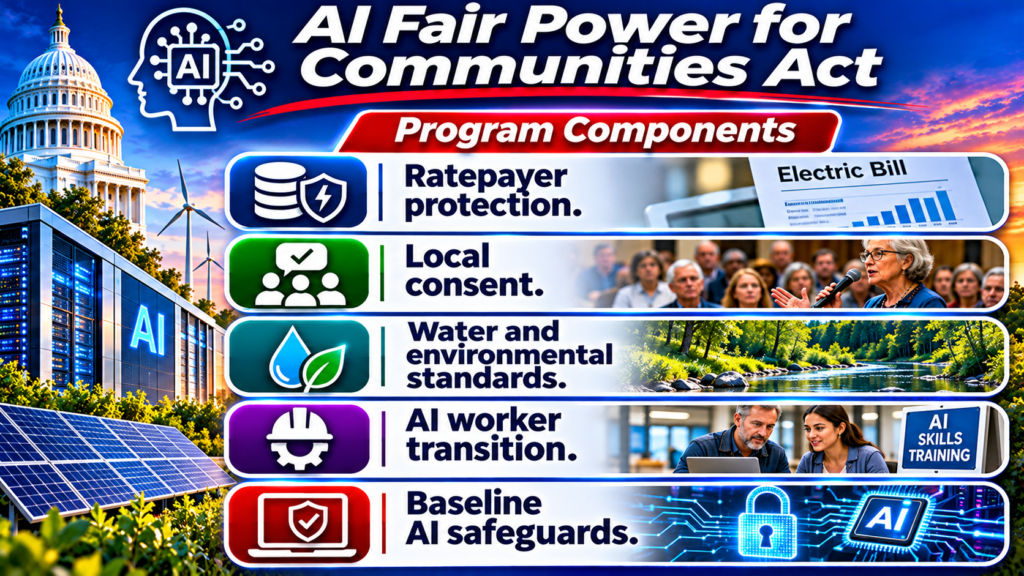
Program 5: Fair Power for Communities Act
Goal: let communities share in AI’s benefits without paying its costs, and lead on the one issue where voters say neither party has a clear answer.
Components:
- Ratepayer protection. Large data centers pay the full cost of the grid upgrades and new generation they require, so household electricity rates do not rise to subsidize them.
- Local consent. Counties and municipalities get a binding vote on siting, with a community benefits agreement covering property taxes, local jobs and road and water impacts.
- Water and environmental standards for cooling, with public reporting of consumption.
- AI worker transition. Fund retraining and wage insurance for workers displaced by automation, paid for in part by a fee on the largest data center operators.
- Baseline AI safeguards. Transparency rules for high-risk AI uses in hiring, lending and health care.
Why the data supports it: about three-quarters opposed a local data center, and 77% feared higher electricity bills. Echelon Insights found voters favored banning a nearby data center 52% to 33%, but flipped to allowing one when it came with protections on rates and property taxes. That conditional support is the policy design.
Bipartisan hook: some Republican nominees already broke with the administration on data centers, and rural opposition ran roughly 3 to 1. Abbott himself imposed restrictions late in the race.
Success metric: no state where data-center growth is blamed for residential rate increases; AI moves from “neither party” to a Democratic advantage in exit polling.