The SAVE America Act
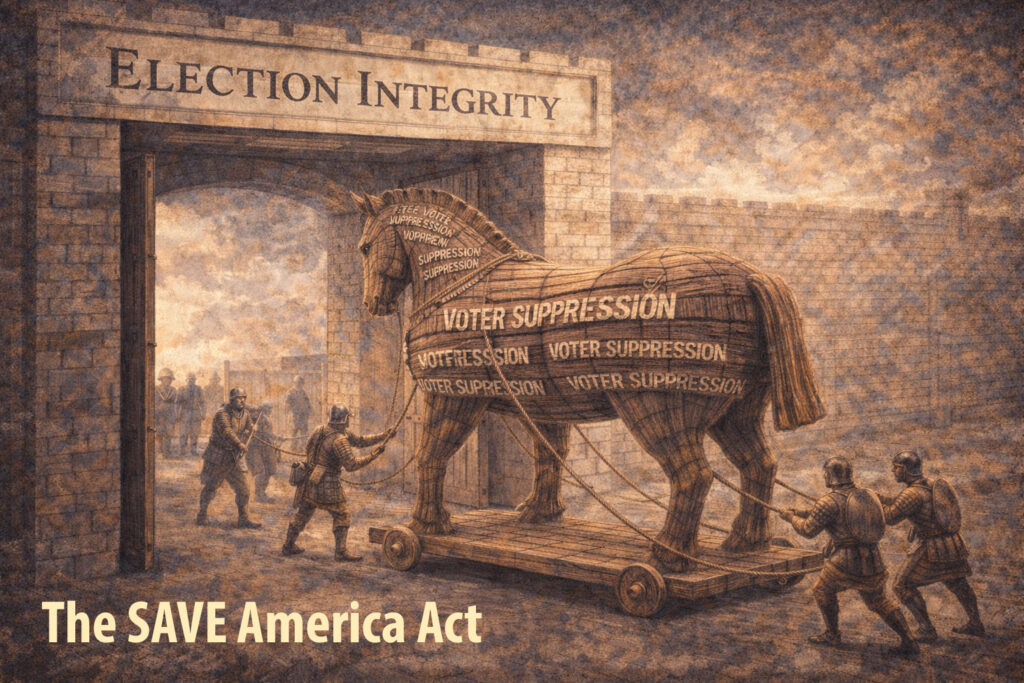
TOP LINE:
Our current election verification process is very effective, and voter fraud is almost nonexistent. This is especially true regarding non-citizen voting, despite claims to the contrary. Even the conservative Heritage Foundation confirms this.
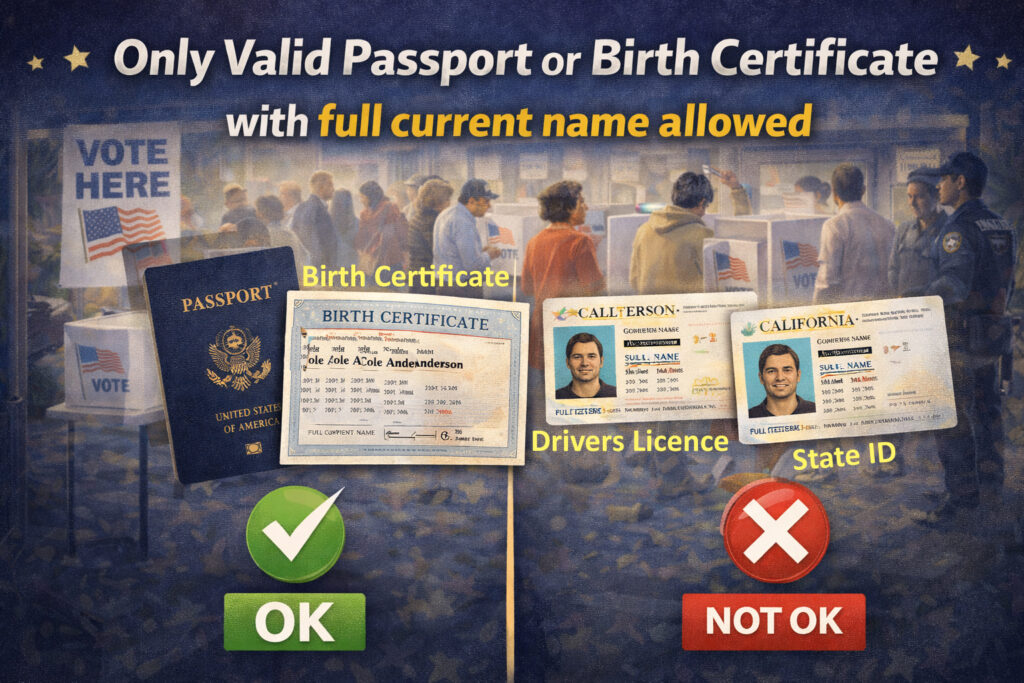
The Republican House has passed what they call –The SAVE America Act – which requires all voters to show proof of citizenship at both registration and at the polls. This requires either a valid passport or a birth certificate with the person’s full current name on it. Many married women use thier husbands surname on thier ID.
This law also shifts eligibility verification from professions at the state level to local volunteers and puts them in legal jeopardy.
This ID requirement will be a burden for millions of US citizens that they cannot meet.
This bill is currently in the Senate for approval.
Urge your Senator to vote NO on the SAVE America Act
Let’s put this to rest up front.
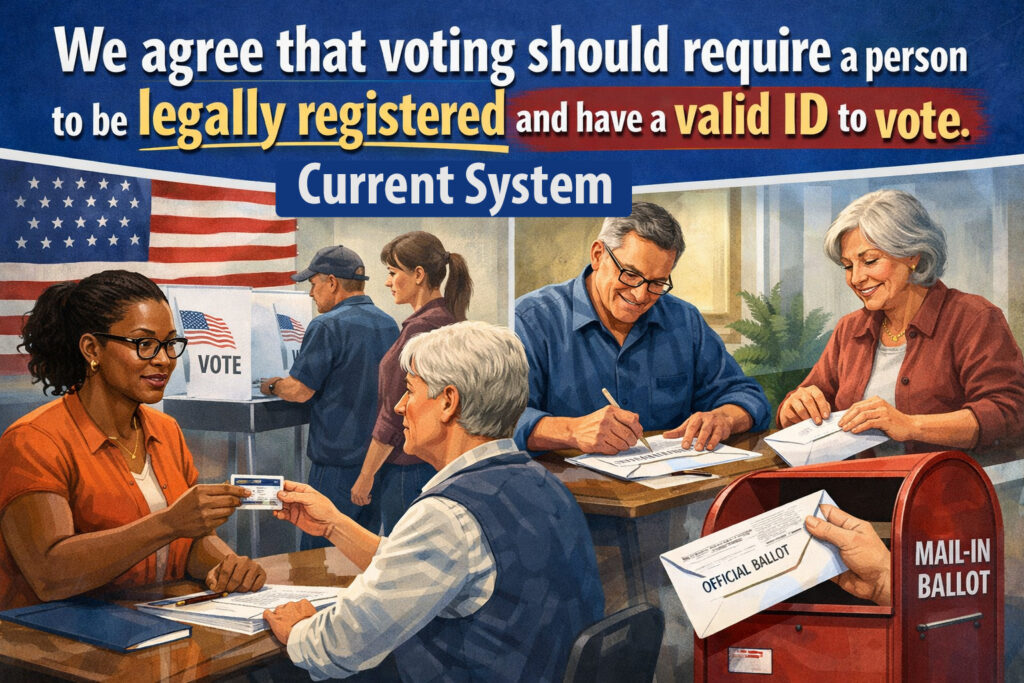
Yes, all voters should be able to prove their eligibility to vote.
The thing is, all states already require voters to prove both identification and their eligibility to vote confirmed before all votes are tabulated.
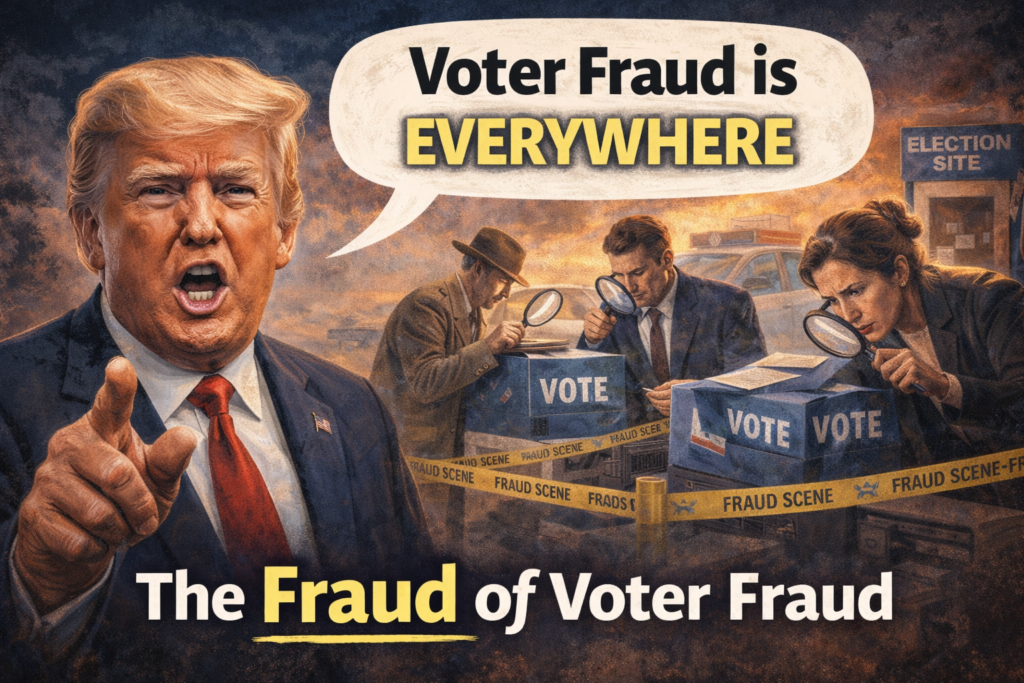
One of the most persistent claims that Donald Trump makes is that elections in which he participated were riddled with fraud. It has become his mantra.
The evidence conclusively proves this claim to be false.
Simply put, the numerous claims of Voter fraud are themselves Fraud.
These claims began during the 2016 election, which he won after defeating Hillary Clinton by a decisive Electoral College margin. They have been repeated consistently since and provide the basis for his insistence on stronger voter identification laws
Trump and his Republican majority in both houses of Congress have proposed Voter ID laws to counter these “massive fraud claims”.
The current law passed by the House is called the SAVE America Act
Does America need stricter voter ID rules to protect federal elections?
Let’s take a look using reliable sources to investigate election fraud in the US.
To avoid the claim of bias lets begin with Trump insiders who investigated claims of voter fraud.
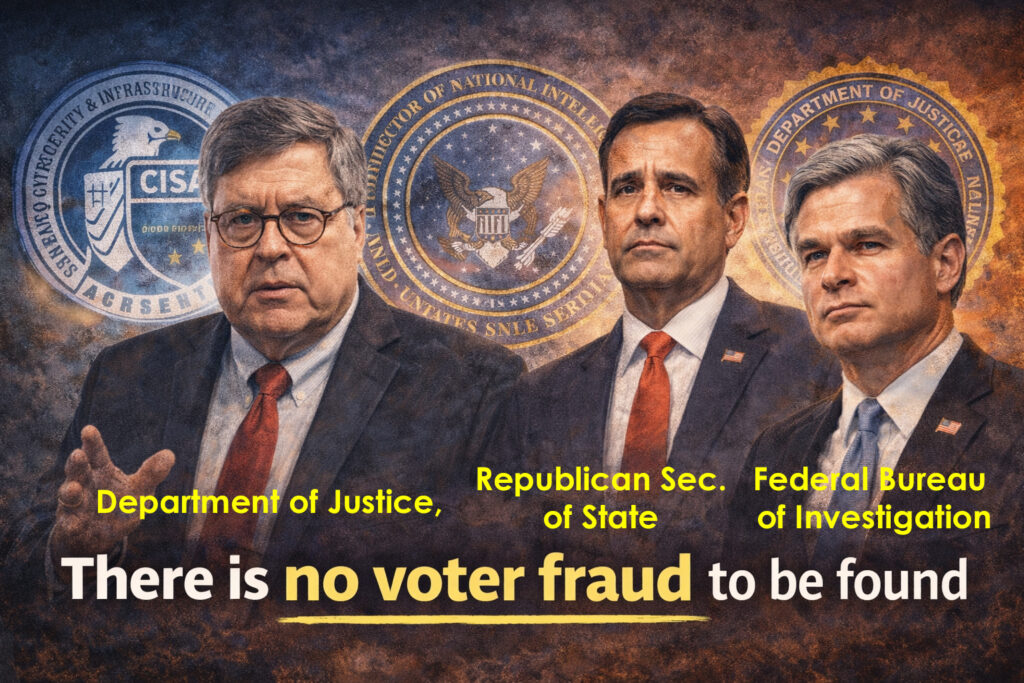
His Attorney General, William Barr, told him directly that the Department of Justice had found no evidence of fraud sufficient to change the election outcome.
The Cybersecurity and Infrastructure Security Agency (CISA), which Trump himself had established, issued a statement calling the 2020 election ‘the most secure in American history.’
Trump’s own Director of National Intelligence, Director of the FBI, and the Secretaries of State of the key battleground states all confirmed the results.
The private investigator Trump paid to find fraud found none. Ken Block, founder of Simpatico Software Systems, was hired by the Trump campaign after the election to conduct data analysis in support of fraud claims. His findings, later made available to federal prosecutors, confirmed that the 2020 election was not stolen. Block later wrote publicly: ‘Trump paid me to find voter fraud. Then he lied after I found the 2020 election wasn’t stolen.’
But what about the fraud lawsuits?
The Trump campaign and allied groups filed 62 lawsuits in 9 states and the District of Columbia contesting election processes, vote counting, and vote certification. Sixty-one of those 62 courts rejected the claims. The single case where Trump initially prevailed involved a narrow procedural matter regarding the timing of ballot curing for first-time Pennsylvania voters, and it was subsequently overturned by the Pennsylvania Supreme Court.
Among the judges who dismissed the suits were numerous judges appointed by Trump himself, as well as Republican-appointed jurists at the appellate level. One federal judge in Pennsylvania described the claims as ‘strained legal arguments without merit and speculative accusations unpled in the operative complaint and unsupported by evidence.’
Noncitizen Voting: The Specific Fear Behind New Legislation
The specific form of fraud invoked to justify the SAVE America Act is noncitizen voting. The evidence on this question is exceptionally clear and consistent across multiple independent sources.
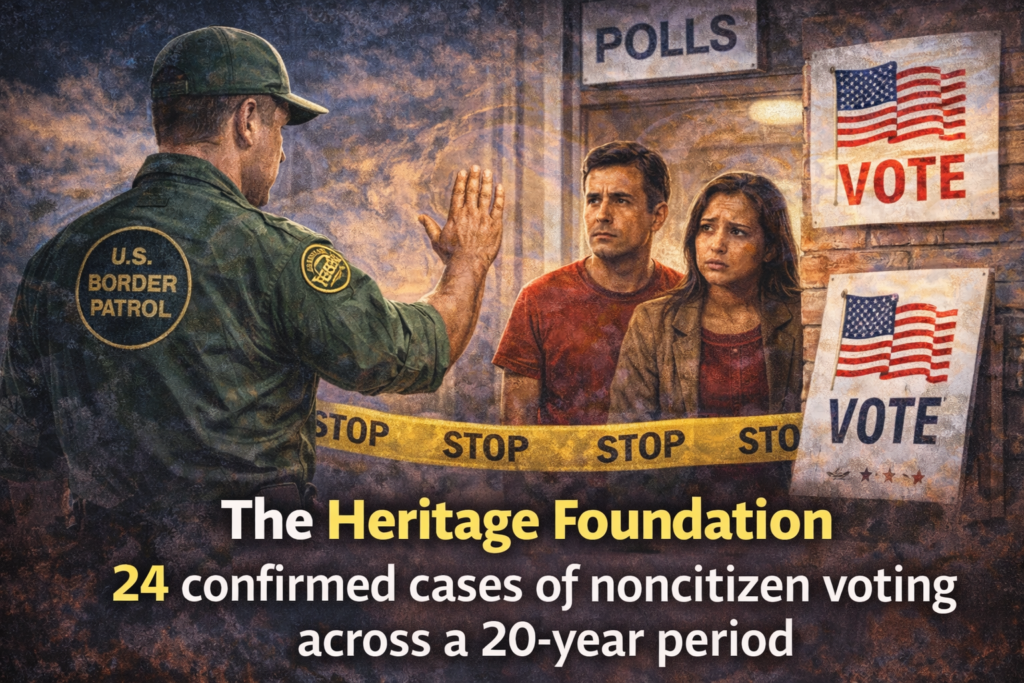
The Heritage Foundation, a conservative research organization, maintains the most comprehensive database of documented voter fraud cases in the United States. As of July 2024, that database contains only 24 confirmed cases of noncitizen voting between 2003 and 2023, a period spanning five presidential election cycles and hundreds of millions of votes cast in federal elections.
The Bipartisan Policy Center, drawing on available prosecution data, found just 77 noncitizen voting cases over 24 years.
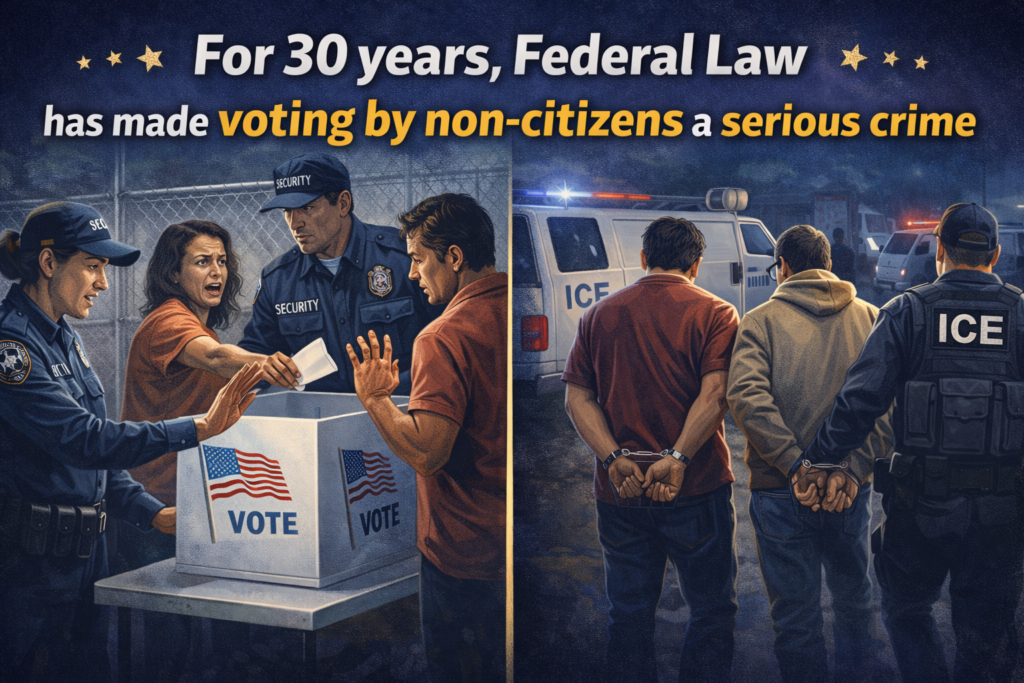
The deterrent to noncitizen voting is already severe. Any noncitizen who votes in a federal election faces up to one year in federal prison and, if in the country without legal status, immediate deportation proceedings.
House Speaker Mike Johnson, in a May 2024 press conference where he demanded action against noncitizen voting, acknowledged when pressed by reporters that widespread noncitizen voting is ‘not been something that is easily provable,’ adding: ‘We all know intuitively that a lot of illegals are voting in federal elections.’ Intuition, in the absence of facts.
How do states currently keep non-citizens from voting?
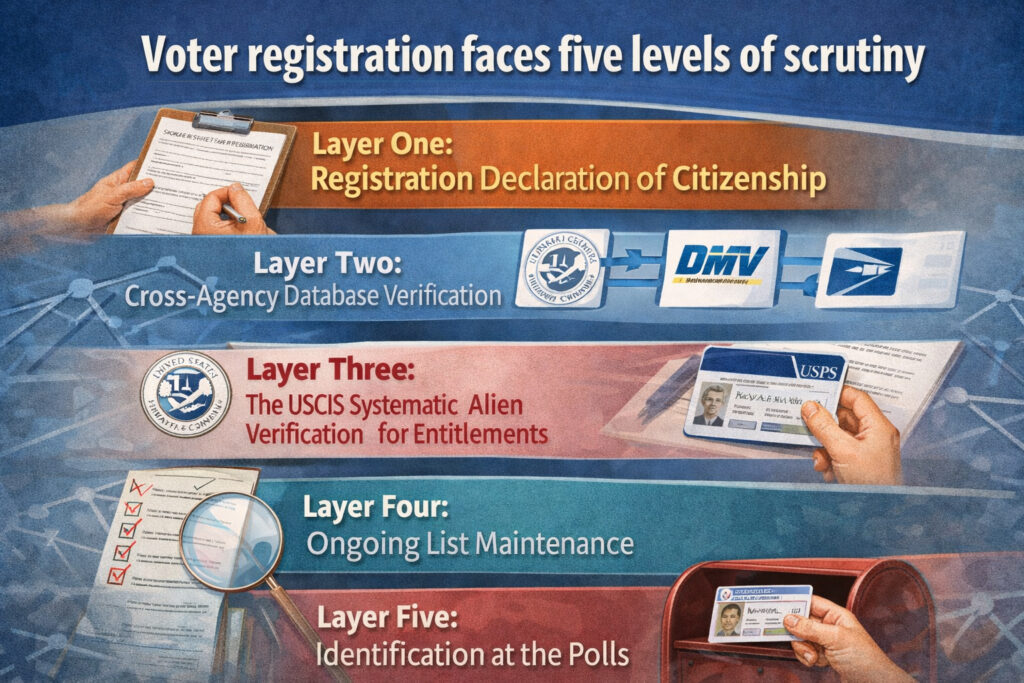
Layer One: The Registration Declaration
When registering to vote, every applicant in every state must attest, under penalty of perjury, that they are a United States citizen and meet all other eligibility criteria. This attestation carries criminal penalties, including federal felony prosecution and, for noncitizens, deportation.
Under federal law, applicants must also provide either their driver’s license number or the last four digits of their Social Security number, which election officials are required to use to verify their identity and eligibility through state and federal databases.
The legal deterrent is substantial: noncitizens are generally well aware of the consequences of federal felony charges and the risk of deportation. It simply is not worth the risk for a noncitizen to attempt to vote.
Layer Two: Cross-Agency Database Verification
Every registration application is cross-referenced against multiple government databases. These include the Social Security Administration database, which verifies identity; the Department of Homeland Security’s immigration databases, which flag potential noncitizens; state motor vehicle databases, which verify driver’s license and ID information; the Social Security Death Master File, which identifies deceased individuals; and U.S. Postal Service change-of-address data, which identifies voters who have moved.
Any discrepancy triggers additional review.
Layer Three: The USCIS SAVE Program
The USCIS Systematic Alien Verification for Entitlements program is a federal database tool that allows government agencies to verify immigration and citizenship status. As of 2025, more than 27 states formally use this program to verify voter citizenship. In 2025 alone, this system processed over 205 million voter verification queries, up from 25 million queries in all of 2024.
When queries return a noncitizen flag, states initiate additional review processes.
Layer Four: Ongoing List Maintenance
Election officials are legally required to conduct regular voter roll maintenance to ensure the accuracy and currency of registration records. This includes periodic systematic purges of deceased registrants using death data from the Social Security Administration and state vital statistics offices; removal of registrants who have moved out of state using cross-state data sharing through the Electronic Registration Information Center (ERIC), to which many states belong; removal of individuals convicted of felonies who are ineligible under state law; and ongoing comparison of voter rolls against citizenship databases.
Layer Five: Identification at the Polls
States with strict photo ID requirements include Georgia, Indiana, Wisconsin, Texas, and Mississippi. States with no formal ID requirement nonetheless require voters to provide their name and address and to sign a poll book, which is compared against registration records.
No voter casts a ballot in any state without some form of identity verification at the point of participation.
OK, so what is wrong with requiring all voters to show proof of citizenship?
As we have seen, non-citizen voting is clearly not an issue. But what is the harm?
It prevents real citizens from voting.
We have a real-world example from Kansas that implemented a strict Voter ID law.
In 2011, Kansas passed a documentary proof of citizenship requirement for voter registration, which took effect in 2013. Within the first years of the law’s operation, more than 31,000 eligible citizens were prevented from completing voter registration because they could not produce the required documents.
Courts ultimately declared the Kansas law unconstitutional.
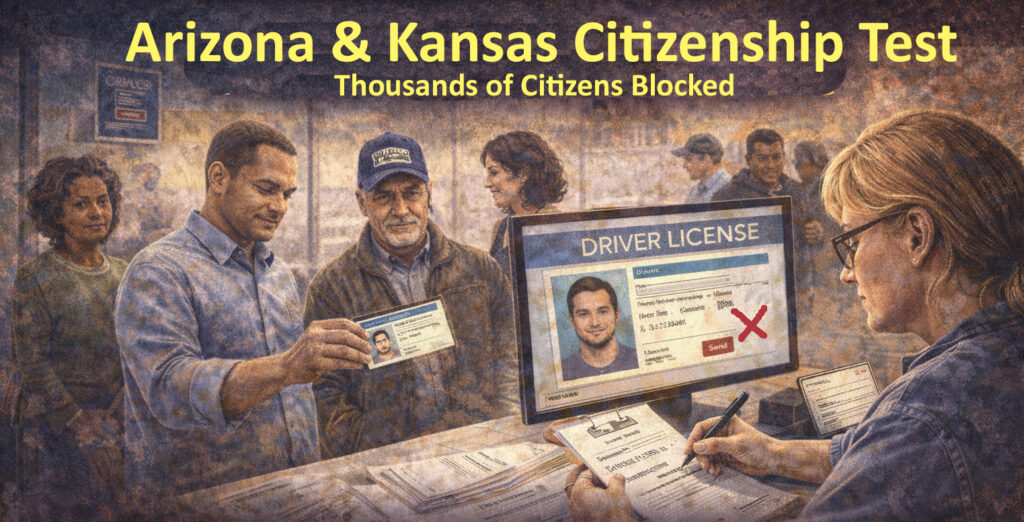
For reference, the annual estimated number of noncitizen registrations in Kansas before the law passed, based on historical enforcement records, was in the single digits to low tens.
Thirty-one thousand eligible citizens were blocked for every handful of potential noncitizens addressed.
What does the new law actually require?
The impact of the SAVE America Act would fall unevenly across the American electorate. While the bill’s stated purpose is to block noncitizen voting, its operational requirements create barriers that affect specific demographic groups of fully eligible citizens at disproportionately high rates.
The Passport Gap
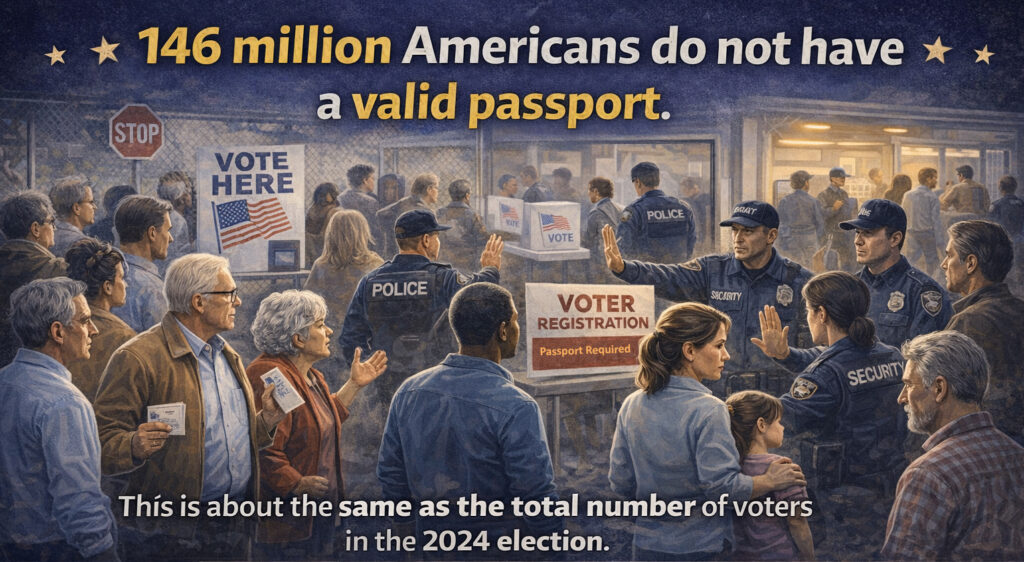
The single most commonly cited qualifying document under the SAVE America Act for most Americans would be a valid U.S. passport.
Yet according to the U.S. Department of State, approximately 146 million American citizens do not possess a valid passport. For context, approximately 153 million Americans voted in the 2024 presidential election. Passport ownership in America correlates strongly with income, education, urbanization, and age.
In seven states, fewer than one in three citizens holds a valid passport: West Virginia, Mississippi, Alabama, Arkansas, Kentucky, Louisiana, and Oklahoma. These are predominantly rural, lower-income states.
By contrast, the states with the highest passport ownership rates are New York, Massachusetts, California, and New Jersey, all of which lean significantly Democratic in federal elections.
The Name-Change Problem
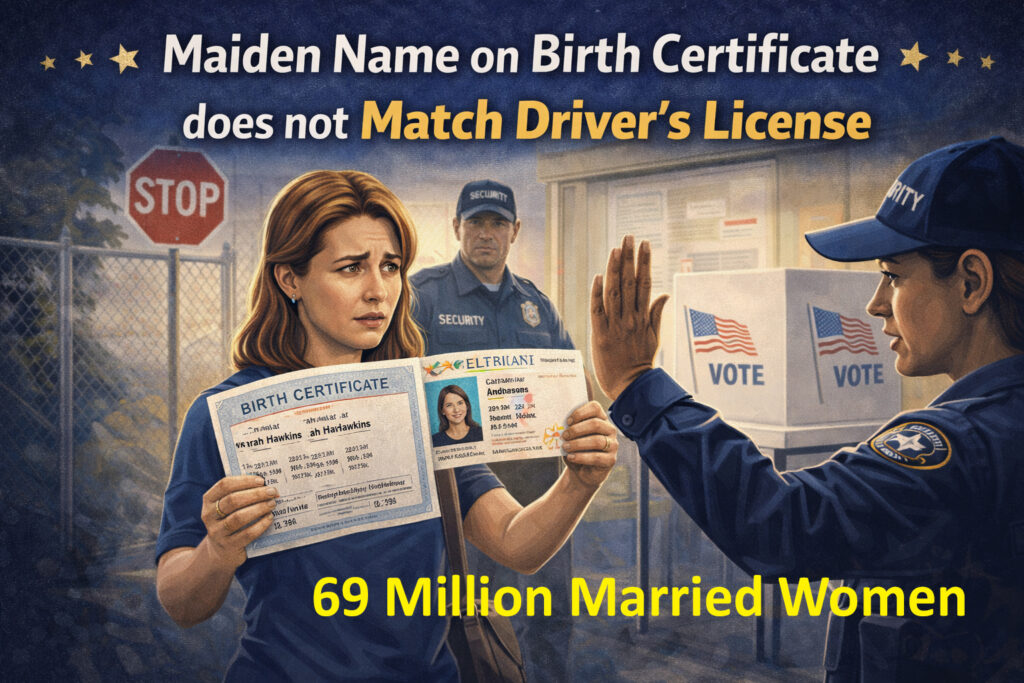
According to census and social research data, approximately 84 percent of women who marry change their surnames. This creates a fundamental documentary mismatch for an estimated 69 million American women: their birth certificate, which lists their maiden name, no longer matches their current legal name.
Under the SAVE America Act, if such a woman tried to use her birth certificate as proof of citizenship, the name discrepancy would create registration complications requiring additional documentation, such as marriage certificates, and potentially requiring multiple trips to election offices to resolve.
Shifts the verification process from state professionals to local volunteers.
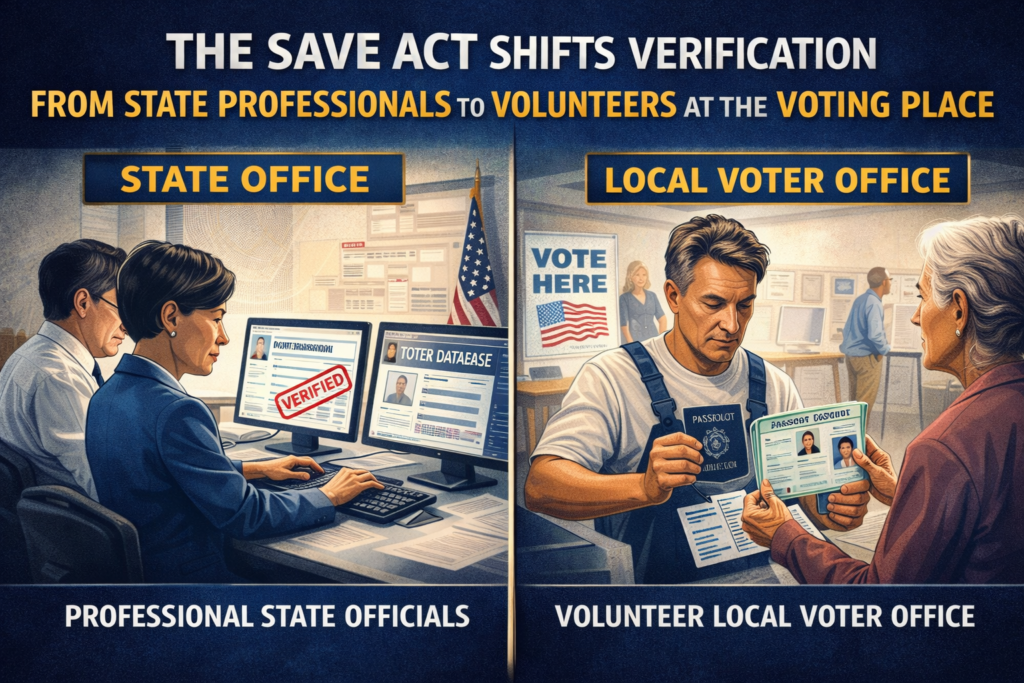
Right now, when there’s a question about a voter’s eligibility, it is resolved by trained professional election officials who understand the law, who have access to government databases, and who are accountable to state oversight.
They have expertise. … They have resources. … They have systems.
Under the SAVE America Act, when an applicant can’t provide the required documents, a new process kicks in.
The SAVE Act would require local election officials to make their own determination as to whether the applicant may properly register to vote, and then personally sign an affidavit explaining their basis for allowing the applicant to register. …
And critically, a new private right of action would allow suits against any election official who registers an applicant who fails to present documentary proof of citizenship.
We are taking discretionary, quasi-judicial decisions about citizenship, complex legal determinations, and handing them to local election workers, often volunteers with no legal training, and then threatening them with lawsuits and criminal penalties if they get it wrong.
That’s an invitation to chaos, inconsistency, and intimidation
Chaos after the midterm election
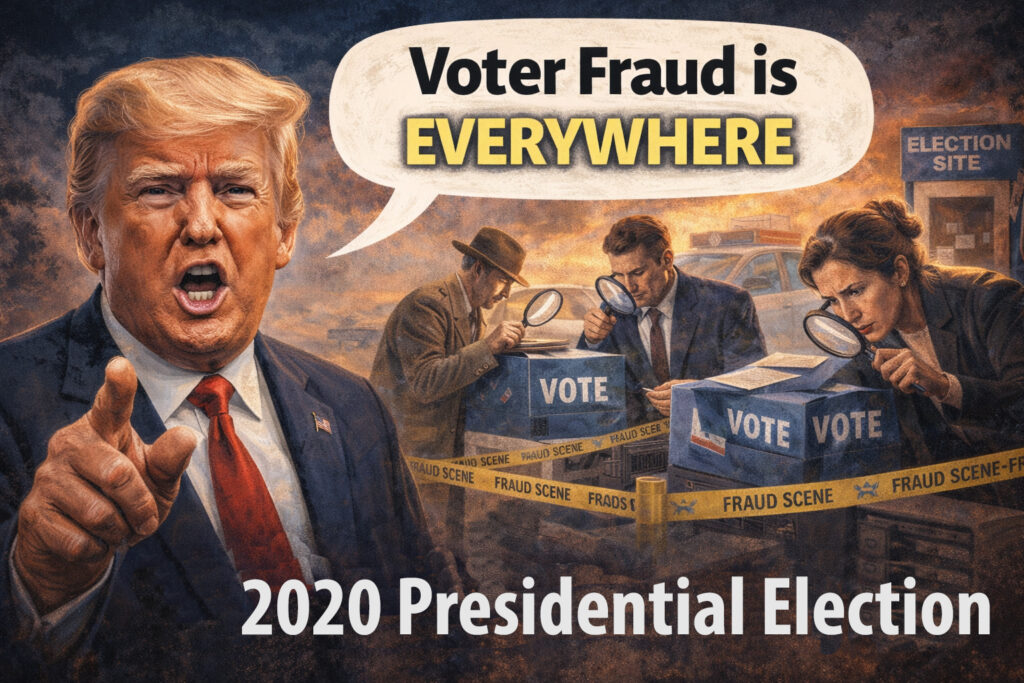
By setting the stage for a multitude of legal challenges, the Save America Act could throw the upcoming midterm election into chaos. Perhaps that is the real reason for this unnecessary law.
It seems to have been a key strategy after the 2020 election.
Conclusion:
Voter fraud in federal elections is exceptionally rare. It is systematically detected. It has never, in any documented case, occurred at a scale sufficient to change the outcome of any federal election.
Noncitizen voting specifically, the stated target of the SAVE America Act, occurs at a rate so low that it appears in the Heritage Foundation’s own conservative tracking database at a rate of roughly one confirmed case per year of federal elections across the entire country.
The SAVE America Act would impose documentary requirements that an estimated 21.3 million fully eligible American citizens cannot readily meet. The populations most affected by those requirements, women who have changed their names through marriage, low-income Americans, rural residents, young first-time voters, and minority citizens, lean disproportionately toward the Democratic Party in federal elections. Every state-level experiment with similar documentary requirements has produced documented suppression of eligible voter registration, not suppression of noncitizen voting.
The bill passed on a nearly party-line vote in the House. Its proponents have publicly tied it to electoral strategy for the 2026 midterm elections.
And it advances a narrative of election fraud that has been the organizing principle of Republican politics since 2020, despite having been rejected by 61 of 62 courts, by the Trump administration’s own Attorney General, by its own cybersecurity agency, by Republican secretaries of state in multiple battleground states, and by the data analyst Trump himself paid to find fraud.
A law that restricts the franchise for millions of eligible citizens while addressing a problem that occurs approximately three times per year in federal elections is not, in any meaningful analytical sense, a solution to voter fraud.