Annex Greenland & Canada
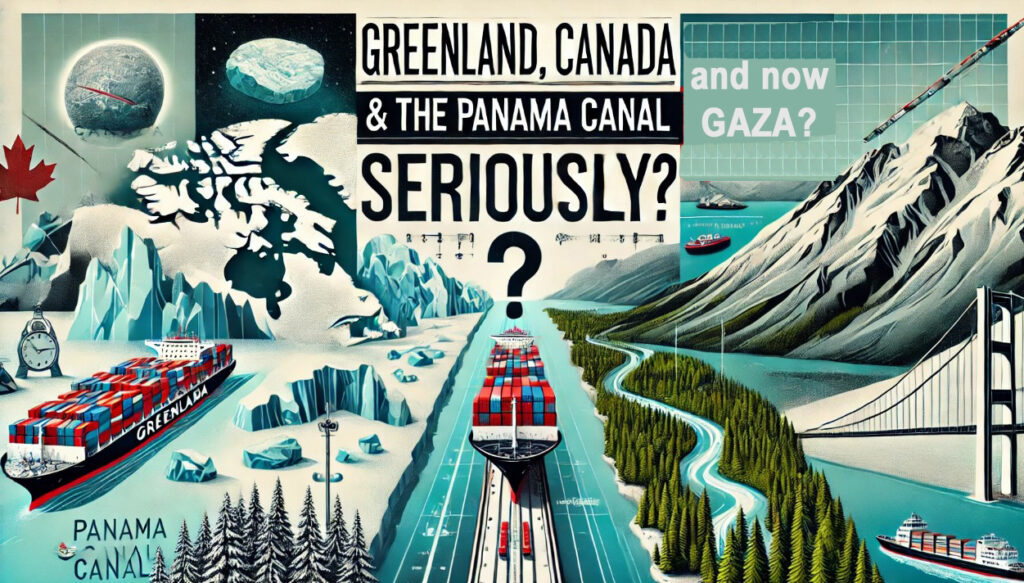
President Trump has expressed interest in annexing Greenland, Canada, and the Panama Canal. This is directly represents the recent National Security Strategy, which is supported by Trump and the GOP.
The 2025 National Security Strategy and the ‘Trump Corollary’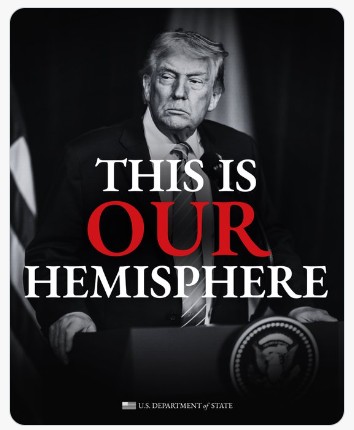
The Trump administration’s November 2025 National Security Strategy represents a fundamental departure from previous U.S. strategic frameworks and explicitly prioritizes Western Hemisphere security over other global commitments.
Core Principles and Divergence from Past Strategies
Trump’s 2025 National Security Strategy explicitly rejects the post-Cold War expansion of America’s ‘national interest’ definition and emphasizes that economics are ‘the ultimate stakes’.
The strategy emphasizes four core objectives in the hemisphere:
- Combating drug trafficking and transnational criminal organizations,
- Preventing hostile foreign influence (particularly from China, Russia, and Iran),
- Ensuring access to critical resources and supply chains, and
- Maintaining regional stability to prevent migration crises.
Implications for Military Action
The National Security Strategy’s emphasis on the Western Hemisphere provided both a strategic rationale and an operational framework for intervention in Western Hemisphere countries. Its treatment of claiming critical resources, combined with the designation of drug cartels as terrorist organizations, created legal pathways for military force.
International Criticism of the Strategy
The National Security Strategy drew sharp criticism from analysts and European allies. Brookings Institution scholars described it as marking ‘an ideological and substantive shift’ that could lead to ‘a far lonelier, weaker, more fractured future’ for America. The strategy’s harsh criticism of European allies, accusing them of ‘civilizational erasure’ through immigration and declining birthrate, has created unprecedented tension in transatlantic relations.
Council on Foreign Relations experts noted that the strategy’s threat-oriented vision of the hemisphere raised troubling questions about how the U.S. would respond to democratic governments that opposed American preferences, particularly given the administration’s use of tariffs and election interference to pressure compliance.
Implications regarding Ukraine & Taiwan
For Ukraine:
- Potential erosion of U.S. leadership in Europe.
- Security assistance may taper.
- European allies may need to assume larger military roles.
For Taiwan:
- Ambiguous U.S. commitments could embolden both deterrence and miscalculation.
- Burden-sharing focus risks gaps in coordinated defense planning.
Click here for a look at the Venezuela Invasion.
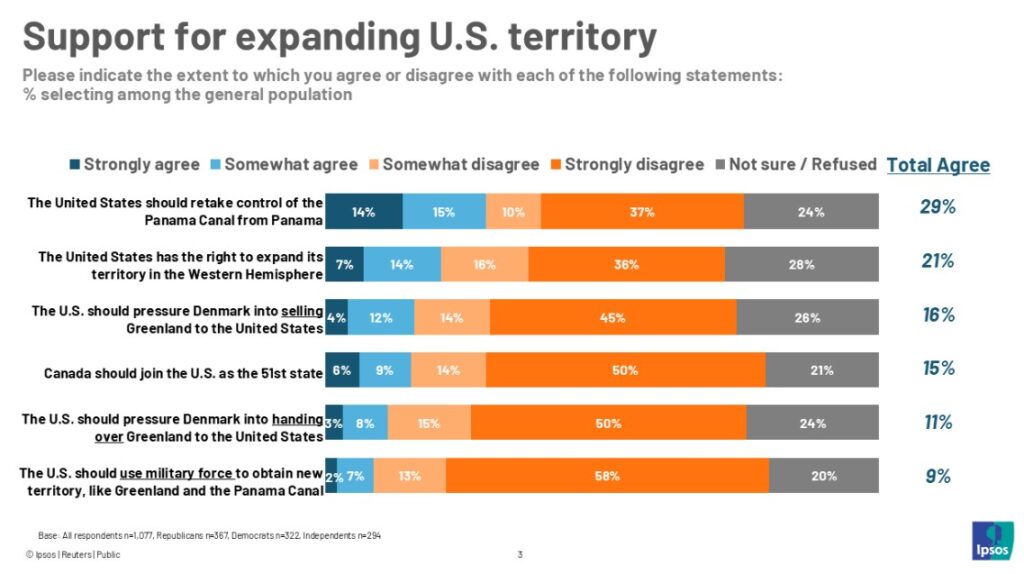
The US public is skeptical of US invasions.
Let’s look at these areas.
Greenland
There is currently an agreement signed in 1951 by the United States and Denmark, which grants the United States sweeping military access in Greenland. The agreement allows the US to “construct, install, maintain, and operate” military bases across Greenland, “house personnel” and “control landings, takeoffs, anchorages, moorings, movements, and operation of ships, aircraft, and waterborne craft.”
SOURCE: https://www.cia.gov/the-world-factbook/countries/greenland/
Greenland, the world’s largest island, is about 80% ice-capped.
Greenland became part of the Kingdom of Denmark in 1953. It joined the European Community (now the EU) with Denmark in 1973 but withdrew in 1985 over a dispute centered on stringent fishing quotas. Greenland remains a member of the EU’s Overseas Countries and Territories Association. The Danish parliament granted Greenland home rule in 1979; the law went into effect the following year. Greenland voted in favor of self-government in 2008 and acquired greater responsibility for internal affairs when the Act on Greenland Self-Government was signed into law in 2009.
The Kingdom of Denmark, however, continues to exercise control over several policy areas on behalf of Greenland, including foreign affairs, security, and financial policy, in consultation with Greenland’s Self-Rule Government.
Greenland is a member of NATO.
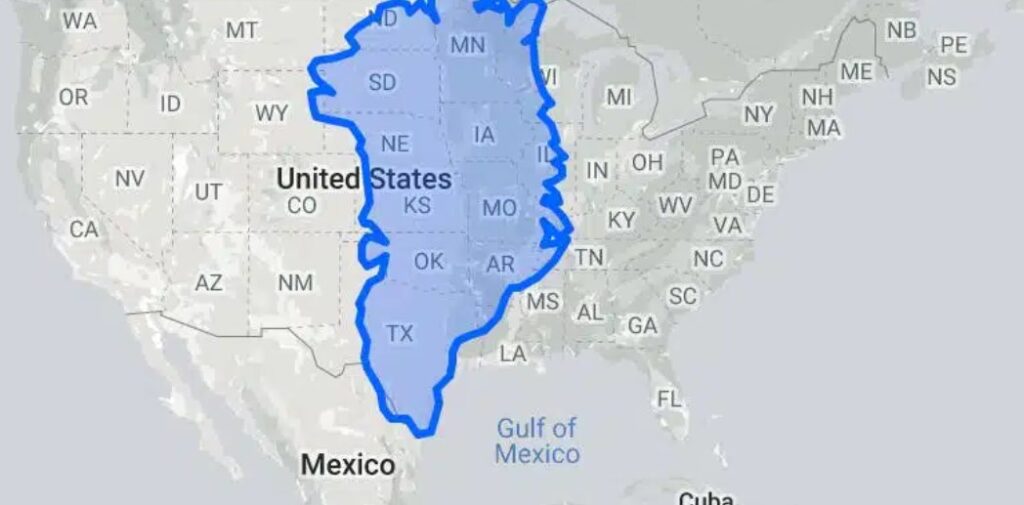
Greenland compared to the USA in size
Population
total: 57,751
male: 29,843
female: 27,908 (2024 est.)
Ethnic groups
Greenlandic 88.1%, Danish 7.1%, Filipino 1.6%, other Nordic peoples 0.9%, and other 2.3% (2024 est.)
Real GDP (purchasing power parity)
$3.857 billion (2021 est.)
$3.808 billion (2020 est.)
$3.801 billion (2019 est.)
note: data in 2021 dollars
It was reported that a senior member of Greenland’s defense force was asked what their reaction would be if invaded. His reply, ” We would be morally obligated to rescue them.”
Canada
SOURCE: https://www.cia.gov/the-world-factbook/countries/canada/
A land of vast distances and rich natural resources, Canada became a self-governing dominion in 1867, while retaining ties to the British crown.
Canada gained legislative independence from Britain in 1931 and formalized its constitutional independence from the UK when it passed the Canada Act in 1982.
Economically and technologically, the nation has developed in parallel with the US, its neighbor to the south across the world’s longest international border.
Canada faces the political challenges of meeting public demands for quality improvements in health care, education, social services, and economic competitiveness, as well as responding to the particular concerns of predominantly francophone Quebec.
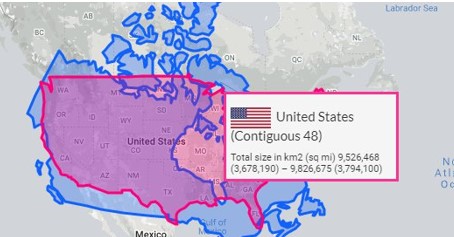
Canada compared to the USA in size
total: 38,794,813
male: 19,234,729
female: 19,560,084 (2024 est.)
Canadian 15.6%, English 14.7%, Scottish 12.1%, French 11%, Irish 12.1%, German 8.1%, Chinese 4.7%, Italian 4.3%, First Nations 1.7%, Indian 3.7%, Ukrainian 3.5%, Metis 1.5% (2021 est.)
Real GDP (purchasing power parity)
$2.238 trillion (2023 est.)
$2.215 trillion (2022 est.)
$2.133 trillion (2021 est.)
Note: data in 2021 dollars
Canada, if it became the 51st state with 40 million in population, would have 45-50 electoral votes.
Panama
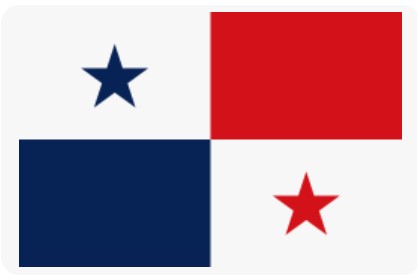
Source: https://www.cia.gov/the-world-factbook/countries/panama/
Explored and settled by the Spanish in the 16th century, Panama broke with Spain in 1821 and joined a union of Colombia, Ecuador, and Venezuela that was named the Republic of Gran Colombia. When the union dissolved in 1830, Panama remained part of Colombia.
With US backing, Panama seceded from Colombia in 1903 and promptly signed a treaty with the US allowing for the construction of a canal and US sovereignty over a strip of land known as the Panama Canal Zone on either side of the structure.
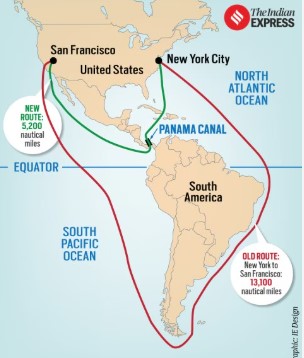
The US Army Corps of Engineers built the Panama Canal between 1904 and 1914. In 1977, an agreement was signed for the complete transfer of the Canal from the US to Panama by the end of the century. Certain portions of the Zone and increasing responsibility over the Canal were turned over in the subsequent decades.
With US help, Panamanian dictator Manuel NORIEGA was deposed in 1989. The entire Panama Canal, the area supporting the Canal, and the remaining US military bases were transferred to Panama by the end of 1999. An ambitious expansion project to more than double the Canal’s capacity by allowing for more Canal transits and larger ships was carried out between 2007 and 2016.
The Panama Canal Authority manages, operates, and maintains the Canal, its complementary works, installations, and equipment, and provides for the orderly transit of vessels through the Canal. The revenue from the canal made up about 4 percent of Panama’s gross domestic product in 2024 and generated just under a quarter of its tax base.
There is no evidence that the Chinese government controls the canal.
Canada compared to the USA in size
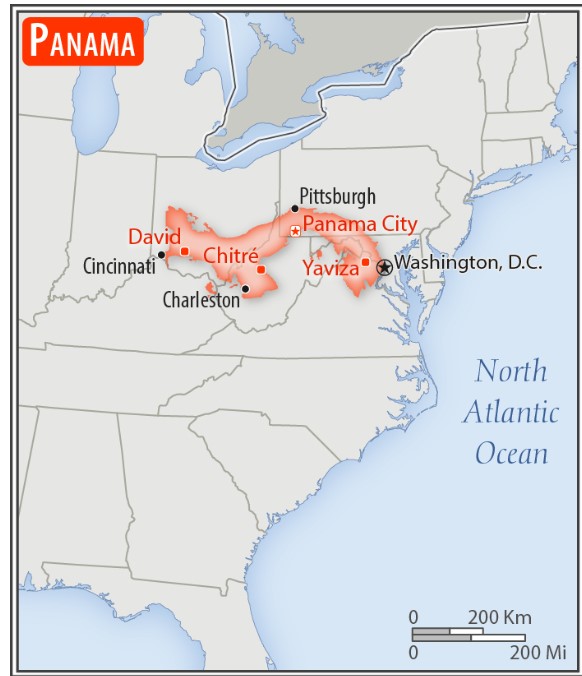
total: 4,470,241
male: 2,251,257
female: 2,218,984 (2024 est.)
Ethnic groups
Mestizo (mixed Indigenous and White) 65%, Indigenous 12.3% (Ngabe 7.6%, Kuna 2.4%, Embera 0.9%, Bugle 0.8%, other 0.4%, unspecified 0.2%), Black or African descent 9.2%, Mulatto 6.8%, White 6.7% (2010 est.)
Real GDP (purchasing power parity)
$159.867 billion (2023 est.)
$148.968 billion (2022 est.)
$134.436 billion (2021 est.)
Note: data in 2021 dollars
Gaza
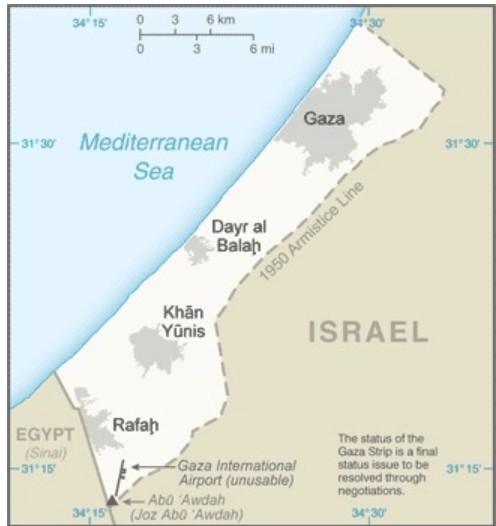
Home to 2.3 million Palestinians, Gaza, wedged between Israel, Egypt and the Mediterranean Sea, has been under blockade for 16 years. This unprecedented situation is the result of a turbulent history.
Gaza’s borders as they exist today date back to 1967. From that time, the “strip” and its inhabitants lived under Israeli occupation for 38 years, until 2005. In 2006, the Islamist party Hamas, which calls for the destruction of Israel, won the legislative elections. After a Palestinian civil war that saw the historic Fatah party ousted from power, Israel, backed by Egypt, imposed in 2007 a land, air and sea blockade around the strip, which is still in place today.
Following Hamas’s October 7 attacks on Israeli territory, Israel’s “complete siege” of Gaza, accompanied by massive bombardments since October 8, risks worsening an already “dire” humanitarian situation that will “deteriorate exponentially,” warned United Nations Secretary-General António Guterres.