Voter Issues
Overview > Voter Issues
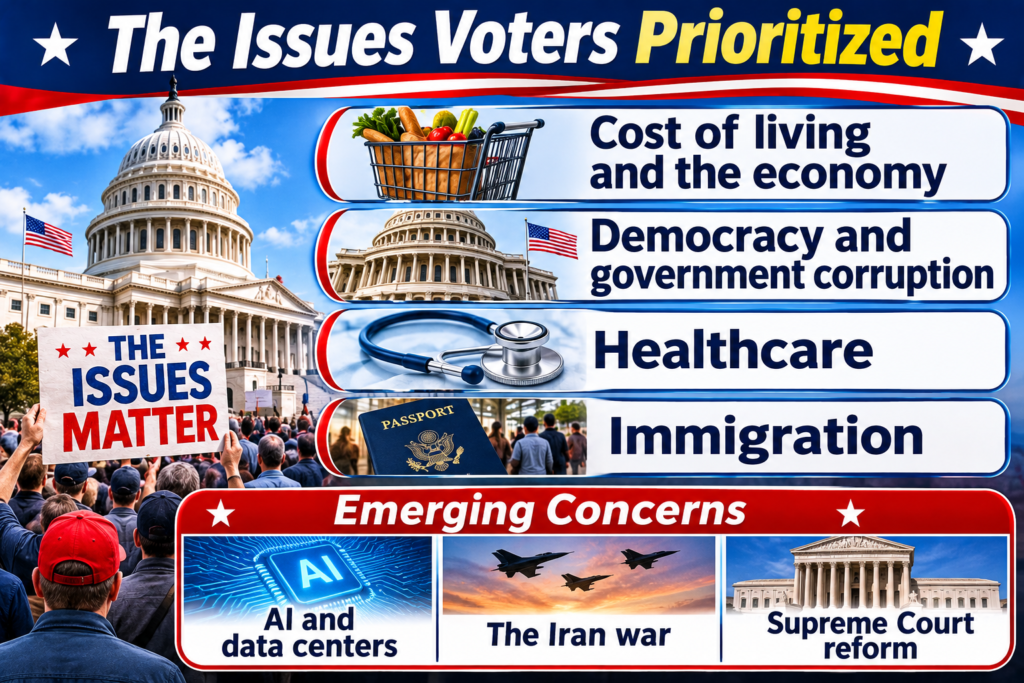
The Issues Voters Prioritized
Five issue clusters drove the 2026 vote. Cost of living and corruption dominated; the others decided margins with specific groups.
| ON THIS PAGE (JUMP LINKS)
• Cost of living and the economy • Democracy and government corruption • Emerging concerns |
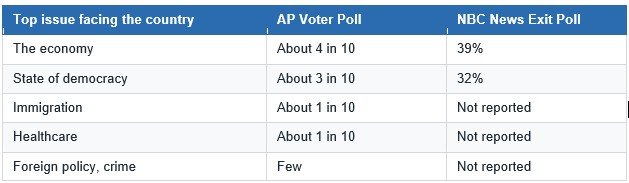
Top issues on election day
When voters rate issues one at a time instead of picking just one, cost-related concerns cluster at the top.
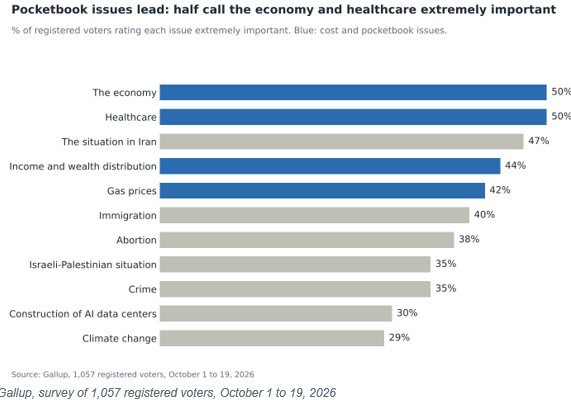
Gallup, survey of 1,057 registered voters, October 1 to 19, 2026
| IMAGE FILE AND ALT TEXT
File: chart-issue-importance.png Alt text: Horizontal bar chart of the percentage of registered voters rating 11 issues extremely important. The economy and healthcare lead at 50%, followed by Iran at 47%, income and wealth distribution at 44%, gas prices at 42%, immigration at 40%, abortion at 38%, the Israeli-Palestinian situation and crime at 35%, AI data centers at 30% and climate change at 29%. Cost-related issues are highlighted. |
Cost of living and the economy

This was the defining issue of the cycle. About 6 in 10 voters were personally very concerned about food and grocery costs. Gas, groceries, utilities and healthcare were each a concern for more than 8 in 10.
Voters also assigned blame. About two-thirds said the president’s policies had made the economy worse. Energy costs rose after the Iran war began in February.
The pain was sharpest at the bottom: among voters earning under $50,000, about 6 in 10 said they were worse off than two years ago. Concern about income and wealth distribution hit its highest midterm level in Gallup’s tracking (44%, up from 32% in 2018).
See our cost-of-living program >
Democracy and government corruption
This is the cycle’s surprise. More than half of voters said government corruption was crucial to their vote, slightly more than the cost of living.
About 3 in 10 named the state of democracy as the country’s top issue, and about 8 in 10 of them backed Democrats. Pew found 73% of registered voters rated the future of democracy very important, including 69% of Republican supporters.
The concern is concrete. About 6 in 10 voters said the president puts his personal interests ahead of the country’s. About 7 in 10 said Congress is not doing enough to check the presidency, including most independents and about 4 in 10 Republicans.
See our clean government program >
Healthcare
Half of voters rated healthcare extremely important in Gallup’s survey, tying its 2010 high; Pew put it third, at 68% very important. Healthcare costs sit on voters’ list of everyday worries alongside gas and groceries. Democrats hold a wider trust advantage here than on most issues.
Immigration
Immigration ranks lower as a top issue (about 1 in 10) but remains a priority for Republican voters (72% very important) and has risen 17 points among Democratic voters since 2022.
It is the only issue where Republicans keep an edge in trust, 44% to 41%. At the same time, 57% of voters said enforcement has gone too far. The opening is a position credible on both border security and limits to enforcement.
Emerging concerns
AI and data centers
57% of voters said AI will do more harm than good. Pew found 61% dislike leaders who support building data centers near them, versus 8% who like it. Even Republicans dislike such leaders by about three to one. An unusually large share trusts neither party on AI, making it open ground.
The Iran war
47% of voters rated the Iran war extremely important. It fed both the energy price shock and the demand for congressional oversight of war powers.
Supreme Court reform
On election day, only about 4 in 10 voters approved of the Court’s job performance. After major 2026 rulings on tariffs and on the Voting Rights Act in Louisiana v. Callais, 74% of voters supported term limits for justices and 70% supported congressional investigation of ethics violations. A binding code of conduct also polls well.
Adding justices is far more divisive: 40% support, driven by Democrats, with independents split and non-MAGA Republicans strongly opposed. Just over a quarter of voters trust neither party to reform the Court.
The practical opening is the consensus end of the debate. An enforceable ethics code and recusal standards fit naturally within the clean government agenda. Term limits are popular, but some designs may require a constitutional amendment. Court expansion energizes the Democratic base but carries real risk with the independents who supplied the 2026 margin.
See our AI and data center program >
Sources for this page
- AP Voter Poll: The economy and the state of democracy are voters’ top issues (AP via PBS News, November 3, 2026)
- Many voters saw midterm election as a rebuke of Trump, NBC News Exit Poll shows (NBC News, November 4, 2026)
- The Issues Voters Say Matter Most This Midterm (Gallup, October 29, 2026)
- Economy Ranks as Top Issue in Midterms for All Voters (Pew Research Center, October 8, 2026)
- How Trump and Republicans lost the 2026 midterm elections, according to AP Voter Poll (AP via PBS News, November 4, 2026)
- Inflation, tariffs and a voter revolt: The midterm verdict on Trump’s economy (AP report, November 5, 2026)
- Fox News Voter Poll: 2026 midterm elections usher in a blue wave (Fox News, November 4, 2026)
- Following Callais: Views on Supreme Court Remain Mixed But Reforms Are Popular (Navigator Research, May 21, 2026)
What Voters Want 2026. Working analysis, November 2026. Figures from election-day and pre-election surveys; projections may change as counting finishes.