Mood of the voters
Overview > The Election
The 2026 Election in Context
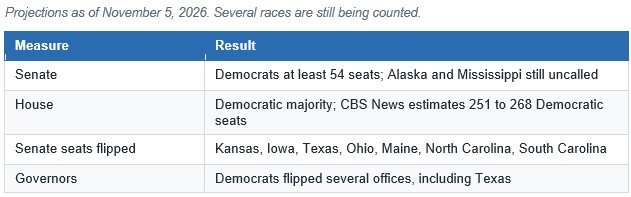
Democrats won control of both chambers in one of the most lopsided midterms in modern history. The mood behind it was anger at the status quo, not enthusiasm for the winners.
Results at a glance
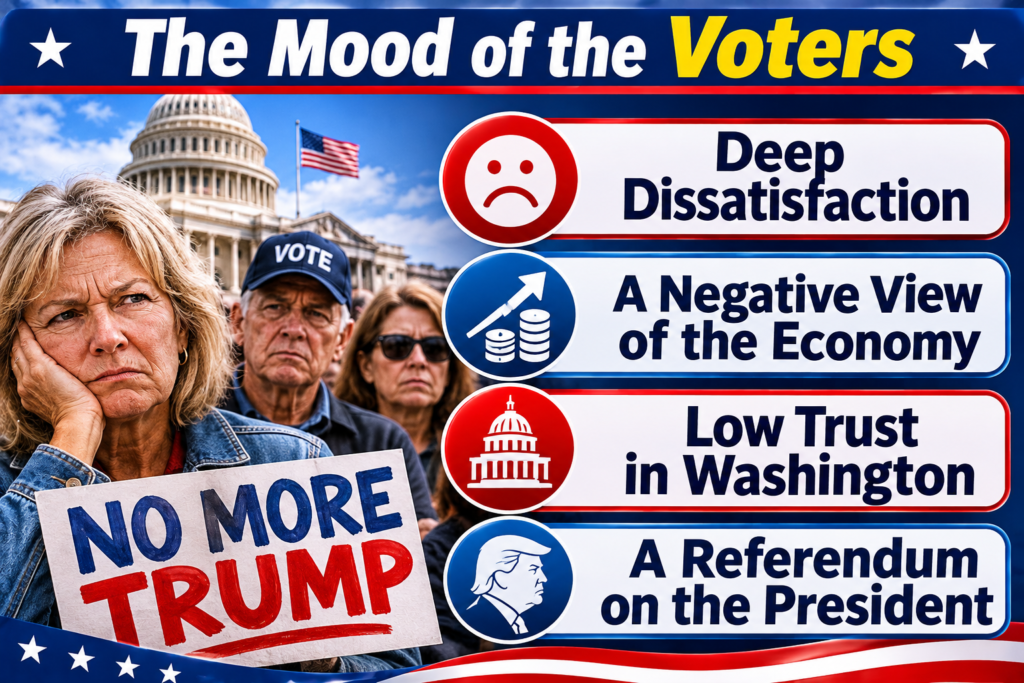
The mood of the voters

Deep dissatisfaction
About three-quarters of voters felt angry or dissatisfied with the direction of the country. Only about one-quarter felt satisfied or enthusiastic. Dissatisfaction reached majorities even in deep-red states.

A negative view of the economy
About three-quarters rated the economy “not so good” or “poor.” Voters were more than twice as likely to say their finances had worsened as improved.

Low trust in Washington
Before the election, Gallup found only 15% of Americans said most members of Congress deserve reelection, a record low before a midterm. Congressional approval stood at 14%. Asked to name the nation’s top problem, more Americans named “the government” (26%) than anything else.

A referendum on the president
About 6 in 10 voters disapproved of President Trump’s job performance. About 4 in 10 said their House vote was meant to oppose him, just under 2 in 10 to support him, and about 4 in 10 said he was not a factor.
A conditional mandate
The winners did not earn deep loyalty. Only about half of voters view the Democratic Party favorably, compared with about 4 in 10 for the GOP. About 2 in 10 Democratic voters hold a negative view of the party they supported.
On the economy, healthcare, taxes, foreign policy and immigration, roughly 2 in 10 voters said neither party would do better. The share was higher still on corruption and AI.
| Voters lent power in exchange for change. In Maine’s Senate race, voters who wanted “the right experience” backed the Republican incumbent, but the larger group seeking “needed change” backed the Democratic challenger. |
The lesson for both parties is the same: voters will punish whoever fails to deliver on prices and accountability, regardless of label.
Related pages
Sources for this page
- 2026 midterm election updates (CBS News, seat projections)
- 2026 midterm election results: Who won the key House and Senate races? (Northeastern Global News, November 5, 2026)