Risks, Trade-offs and Next Steps
Overview > Risks and Next Steps
Risks, Trade-offs and Next Steps
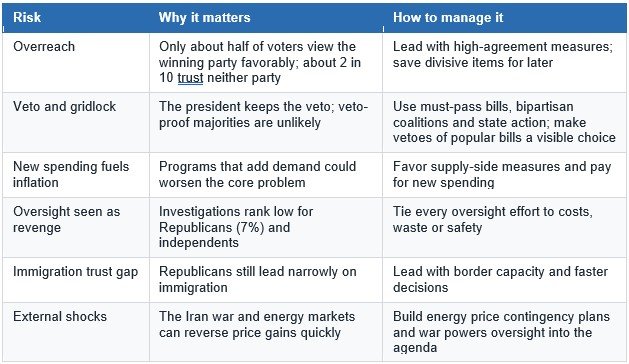
The largest risk is misreading the result: treating a vote against the status quo as a vote for a full partisan agenda. The second is delivering too slowly for voters who are already angry.
Key risks
Trade-offs to decide now
- Speed versus scale. Smaller bills that pass in 2027 may beat larger packages that stall until 2029. We recommend speed.
- Relief versus structure. Rebates and caps help now; zoning and competition reforms take years. A credible agenda needs both, with relief first.
- Oversight intensity. Aggressive oversight energizes the base but risks alienating the persuadable voters who supplied the margin. We recommend targeted oversight tied to costs.
Timeline
By December 2026 Leadership picks the two first-100-day priorities; budget staff estimate costs for all six programs; message testing begins.
January 2027 Introduce the Clean Government and Accountability Act and the first cost-of-living bill in the opening days of the new Congress.
First quarter 2027 Launch the delivery unit and public scorecard; convene governors on the state partner track.
Mid 2027 Attach health, housing and immigration pieces to spending and reauthorization bills.
2028 Campaign on a record of measurable delivery, using each program’s success measures.
Open questions
- Which audience is the priority for 2028: holding new swing voters, or expanding further?
- What limits will leadership set on new spending?
- Which governors are ready to move first on the state partner track?
| BUTTON / CALL TO ACTION
Back to the overview Link: /midterms-2026 |
What Voters Want 2026. Working analysis, November 2026. Figures from election-day and pre-election surveys; projections may change as counting finishes.