The 2026 Midterms: The Path Forward
Overview
| THE OPPORTUNITY
The November 3 midterms gave a new majority control of both chambers of Congress and a clear signal of what voters want: lower costs, affordable health care and a government that answers to them. Voters across party lines agree on the problems, from prices to corruption, which opens the door to bipartisan wins and to winning back trust that neither party now holds. |
| THE CHALLENGE
That power came with conditions. Voters were angry, not enthusiastic; only about half view the winning party favorably, and roughly 2 in 10 trust neither party. A president of the other party holds the veto, prices can be pushed up by forces no bill controls, and voters expect visible results before 2028. A majority that mistakes a protest vote for a blank check will lose it. |
The results
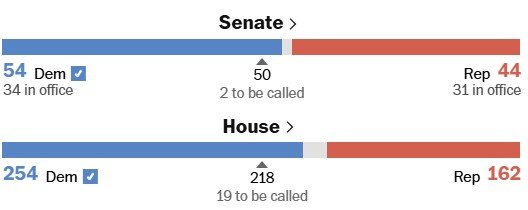
Projections as of November 5, 2026. Several races are still being counted.
| Measure | Result |
| Senate | Democrats at least 54 seats; Alaska and Mississippi still uncalled |
| House | Democratic majority; CBS News estimates 251 to 268 Democratic seats |
| Senate seats flipped | Kansas, Iowa, Texas, Ohio, Maine, North Carolina, South Carolina |
| Governors | Democrats flipped several offices, including Texas |
What it means
1 Prices decide everything. About 9 in 10 voters called the cost of living a crucial or major factor. Every program must show up on a household bill.
2 Accountability is a cost issue too. More than half called corruption crucial to their vote, slightly more than those who mentioned the cost of living.
3 The mandate is conditional. About 4 in 10 voted to oppose the president, but few voted for a party platform. Loyalty must be earned through delivery.
4 Shared ground exists. The economy, immigration and crime matter to voters in both parties, which is where bipartisan votes can be found.
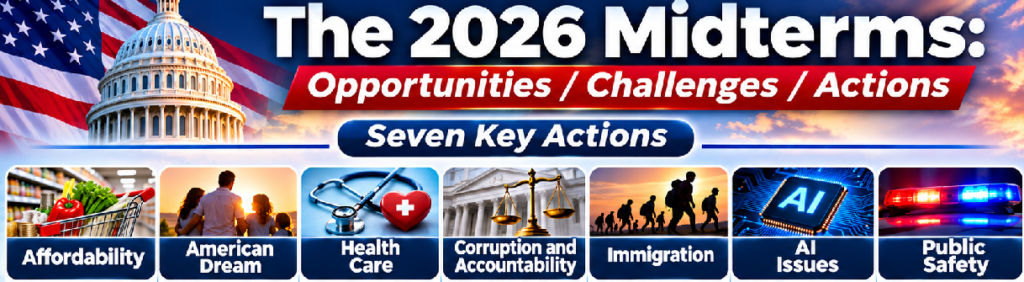
Our response: seven key actions
| Theme | Program | Visible results in |
| Affordability | Kitchen Table Relief Package | 6 to 12 months |
| American Dream | Build and Care Initiative | 12 to 36 months |
| Health Care | Health Cost Guarantee | 6 to 18 months |
| Corruption and Accountability | Clean Government and Accountability Act | 3 to 9 months |
| Immigration | Secure and Fair Border Compact | 12 to 24 months |
| AI Issues | Fair Share Grid and Worker Shield | 6 to 18 months |
| Public Safety | Safe and Trusted Communities | 12 to 24 months |
Design options
The new majority faces important choices about how to use its power.
| Option | What it means | Trade-off |
| Focused delivery (recommended) | Pick a few nameable wins on prices and ethics, pass them fast and report results publicly. | Builds trust quickly; leaves some priorities waiting. |
| Broad agenda | Move on every priority at once through large packages. | Speaks to the whole coalition; risks stalling and veto fights with little to show by 2028. |
| Bipartisan governing coalition | Build each bill around measures that draw Republican votes. | Harder to veto and more durable; slower and less satisfying to the base. |
Success metrics
These key measures will show whether the majority is meeting the conditions voters set.
| Measure | Baseline | Target |
| Voters reporting inflation hardship | About 8 in 10 | Clear decline by fall 2028 |
| Congressional approval | 14% | Measurable rise |
| Voters who trust neither party on core issues | About 2 in 10 | Falling |
| Nameable wins passed in the first 100 days | None | At least two |
| Public scorecard published on schedule | None | Every quarter |
Sources for this page
- 2026 midterm election updates (CBS News, seat projections)
- 2026 midterm election results: Who won the key House and Senate races? (Northeastern Global News, November 5, 2026)
- AP Voter Poll: The economy and the state of democracy are voters’ top issues (AP via PBS News, November 3, 2026)
- How Trump and Republicans lost the 2026 midterm elections, according to AP Voter Poll (AP via PBS News, November 4, 2026)
- The Issues Voters Say Matter Most This Midterm (Gallup, October 29, 2026)