The Mood of the Voters
Overview > Mood of the Voters
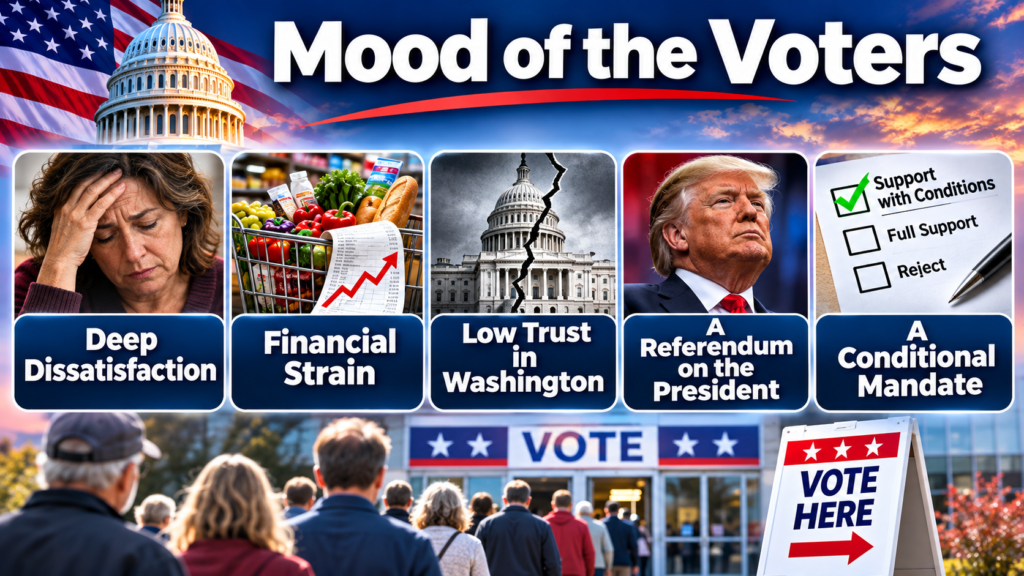
The Mood of the Voters
The 2026 electorate was angry at the status quo, not enthusiastic about the winners. That mood is both the new majority’s opening and its biggest risk.
| 3 in 4
felt angry or dissatisfied with the country’s direction |
3 in 4
rated the economy not so good or poor |
14%
approved of Congress before the election |
About three-quarters of voters felt angry or dissatisfied with the direction of the country. Only about one-quarter felt satisfied or enthusiastic. Dissatisfaction reached majorities even in deep-red states.
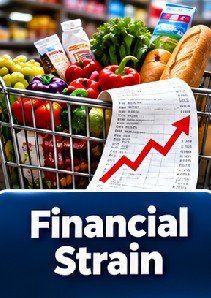
About three-quarters rated the economy “not so good” or “poor.” Voters were more than twice as likely to say their finances had worsened as improved, and among voters earning under $50,000, about 6 in 10 said they were worse off than two years ago.
Low trust in Washington
Before the election, Gallup found only 15% of Americans said most members of Congress deserve reelection, a record low before a midterm. Asked to name the nation’s top problem, more Americans named “the government” (26%) than anything else.
A referendum on the president
About 6 in 10 voters disapproved of President Trump’s job performance. About 4 in 10 said their House vote was meant to oppose him, just under 2 in 10 to support him, and about 4 in 10 said he was not a factor.
A conditional mandate
Only about half of voters view the Democratic Party favorably, compared with about 4 in 10 for Republicans, and about 2 in 10 Democratic voters hold a negative view of the party they supported. On the economy, health care, taxes, foreign policy and immigration, roughly 2 in 10 said neither party would do better; the share was higher on corruption and AI.
| In Maine’s Senate race, voters who wanted “the right experience” backed the Republican incumbent, but the larger group seeking “needed change” backed the Democratic challenger. Voters lent power in exchange for change. |
Design options
How leaders respond to this mood matters as much as what they propose.
| Option | What it means | Trade-off |
| Humility and results (recommended) | Acknowledge the anger, avoid victory laps and point to specific deliverables. | Matches the conditional mandate; less rallying for the base. |
| Mandate claim | Treat the result as approval of the full platform. | Energizes supporters; invites backlash from voters who only wanted change. |
| Shared frustration | Speak to anger at Washington across party lines, including on ethics and checks on power. | Reaches independents and soft Republicans; must be backed by reforms that bind the majority itself. |
Success metrics
| Measure | Baseline | Target |
| Voters satisfied with the country’s direction | About 1 in 4 | Rising |
| Voters rating the economy positively | About 1 in 4 | Rising |
| Voters saying finances worsened versus improved | More than 2 to 1 | Narrowing |
| Favorable view of the majority party | About half | Held or rising |
| Voters trusting neither party | About 2 in 10 | Falling |
Related pages
Sources for this page
- AP Voter Poll: The economy and the state of democracy are voters’ top issues (AP via PBS News, November 3, 2026)
- How Trump and Republicans lost the 2026 midterm elections, according to AP Voter Poll (AP via PBS News, November 4, 2026)
- AP Voter Poll: How key demographic groups voted in the 2026 midterms (AP via PBS News, November 3, 2026)
- The Issues Voters Say Matter Most This Midterm (Gallup, October 29, 2026)
- Inflation, tariffs and a voter revolt: The midterm verdict on Trump’s economy (AP report, November 5, 2026)
The 2026 Midterms: What Comes Next. Analysis updated November 8, 2026. Figures from election-day and pre-election surveys; projections may change as counting finishes.